
Stainless Steel Blade for Food Processing | Custom Food Grade Cutting Blades
- HRC 50–59Food-grade martensitic
stainless steel - ±0.02 mmThickness tolerance,
flatness ≤0.05 mm - Food-Contact Safe420 · 440A · 440C
& 1.4116 grades - Custom to DrawingTooth profile, bore &
mounting holes
Our food processing blades are designed to meet the diverse cutting demands of modern food production lines. The product range includes bread slicing blades, meat cutting knives, vegetable and fruit processing blades, bone cutting blades, as well as poultry processing knives such as deboning blades and vent cutting blades for poultry evisceration. These blades are widely used in bakeries, meat processing plants, poultry slaughterhouses, and automated food processing lines.
Manufactured from food-grade stainless steel, high-carbon steel, and carbide materials, our industrial food cutting blades deliver precise cuts, smooth edges, and consistent performance. All blades can be customized in size, thickness, tooth profile, mounting holes, and hardness to fit different machines and production requirements.
- One supplier for the whole food-cutting line — bread slicing blades, meat and bone cutting knives, vegetable and fruit blades, poultry deboning and vent knives, plus grinder knives and perforated plates
- Food-grade martensitic stainless steel, matched to the duty — 420 / 440A / 440C / 1.4116 selected for the product you cut, with material certificates and food-contact declarations available on request
- Edge geometry ground to your machine — scalloped, wavy or plain edges, tooth pitch, edge angle, thickness and mounting holes all cut to your drawing or to a sample blade
- Hardness and dimensions reported per batch — 100% edge inspection, so a running production line is never stopped by a chipped edge or a burr left on the cut
Stainless Steel Food Processing Blades We Manufacture

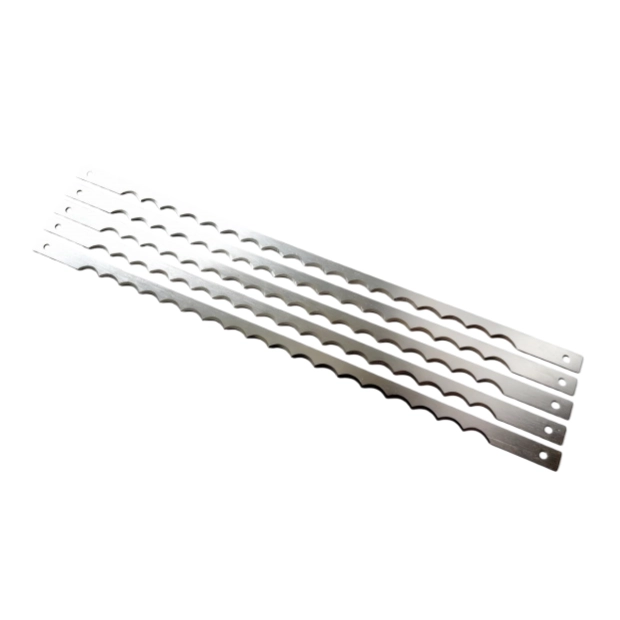
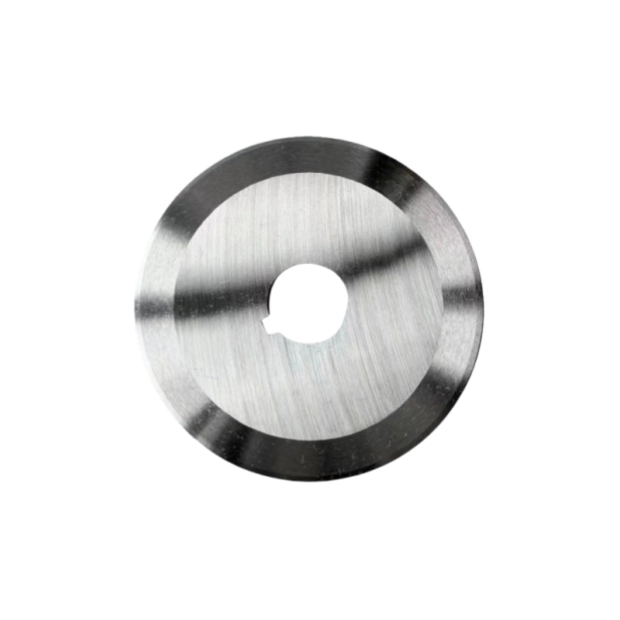
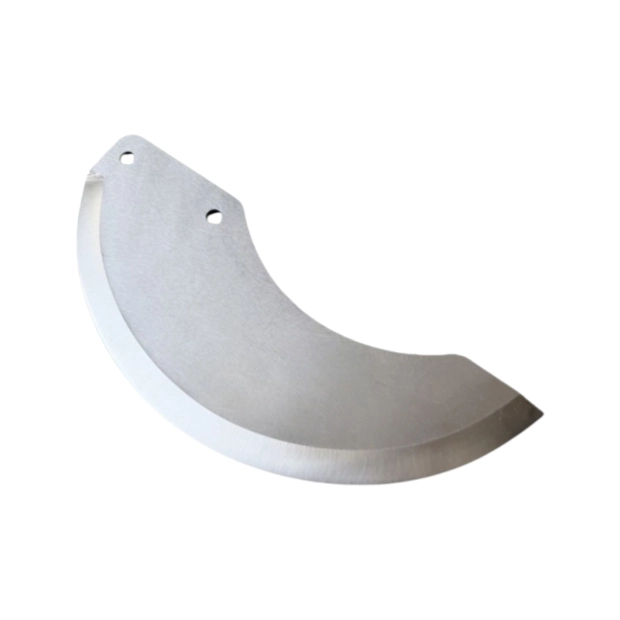
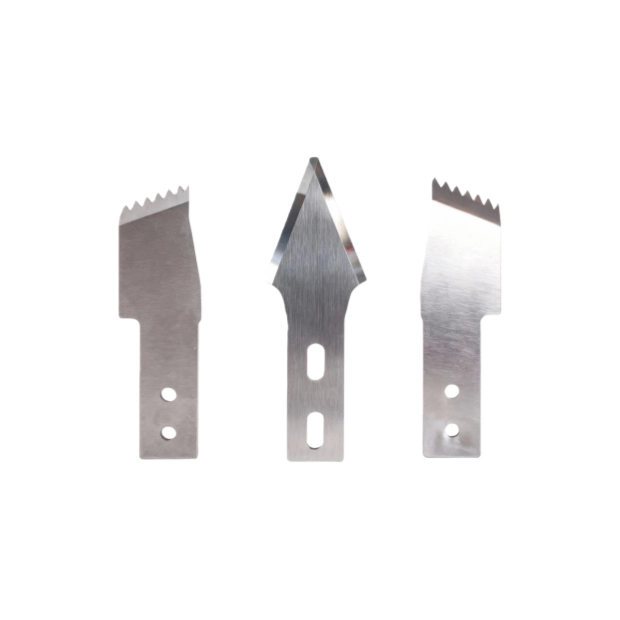
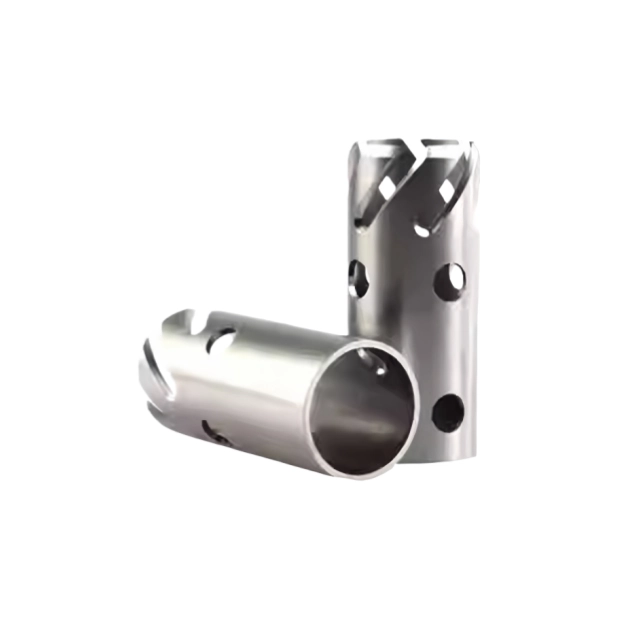
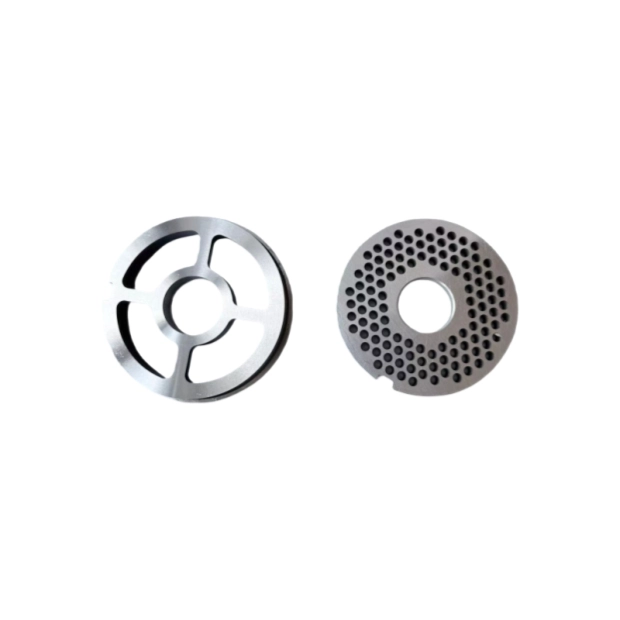
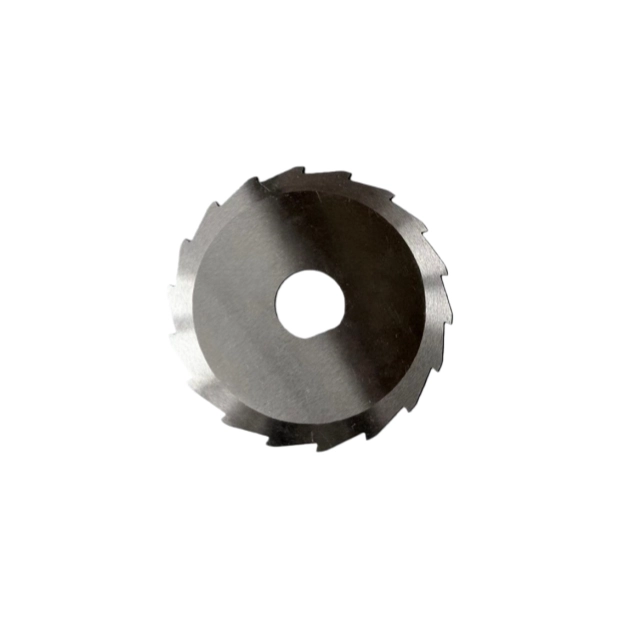
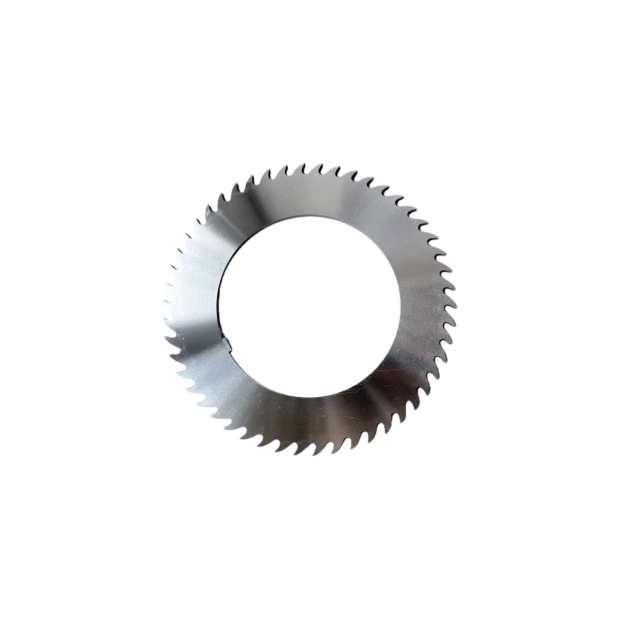
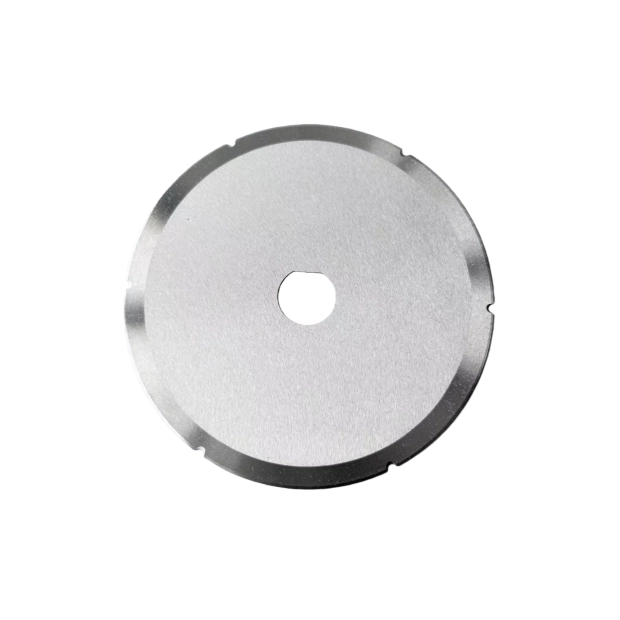
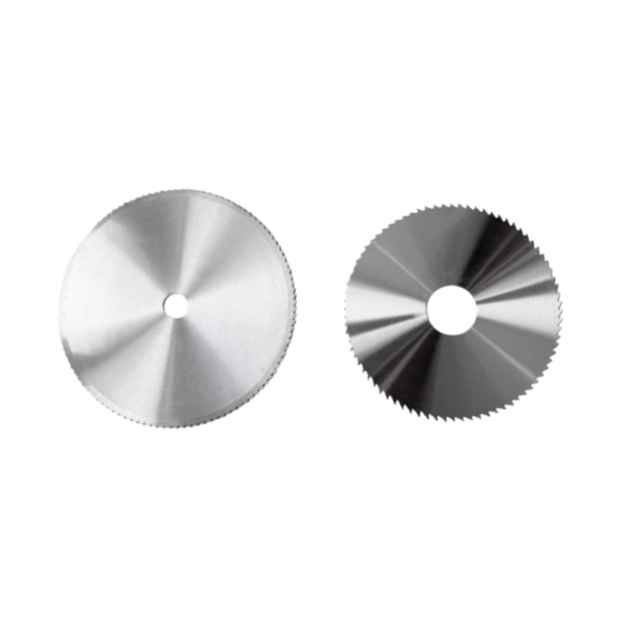
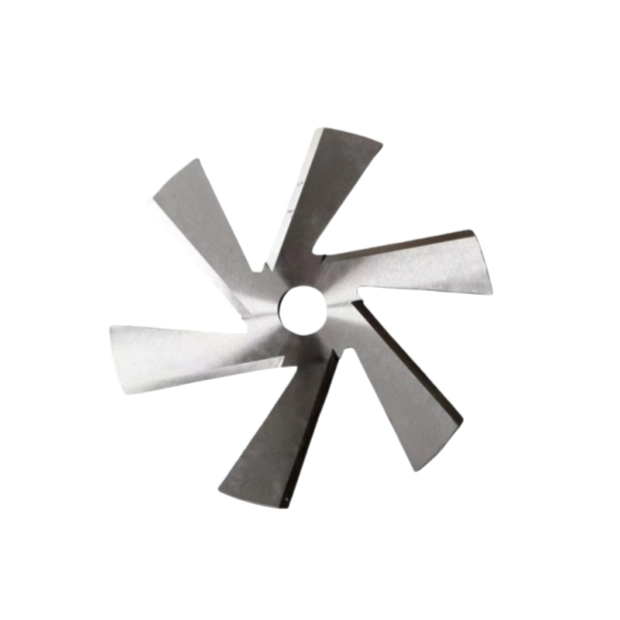
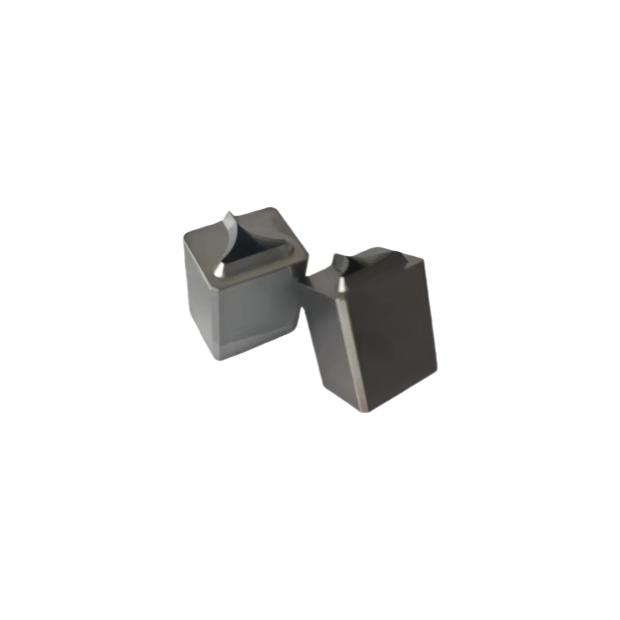
Food-grade stainless steel blades — the standard food processing range Stainless blades with plain, wavy and scalloped edge profiles Curved cutting blade for portioning and slicing duty Poultry arrow blade for evisceration and vent cutting lines Poultry vent cutting knives, ground to the machine drawing Meat grinder knife and perforated plate supplied as a matched pair Round food cutting knife for continuous slitting lines Round food knife — edge ground and honed for a clean cut Hardened and polished round knife for wash-down environments Circular stainless slitting blade with machined centre bore Stainless steel impeller for dicing and slicing machine heads Tungsten carbide insert tips for high-wear cutting heads
Choosing the Grade: 420, 440A, 440C or 1.4116
| Grade | Hardness | Corrosion resistance | Best for | What it gives you |
|---|---|---|---|---|
| 420J2 / 3Cr13 (1.4021) | HRC 48–52 | Moderate | High-volume bread slicers, vegetable dicers, light slicing duty | The economical entry point of the food-grade range. Soft enough to take a keen scalloped edge quickly, easy to regrind, and adequate for dry or short-contact cutting. |
| 420 / 4Cr13 (1.4034) | HRC 50–55 | Moderate to good | General meat and vegetable cutting, poultry knives, slicing machines | The workhorse food grade. More carbon than 420J2 for better edge retention, still stainless enough for routine wash-down between shifts. |
| 420HC (X45Cr13) | HRC 54–56 | Good | Long production runs, repeated cleaning cycles | Higher-carbon version of 420. Holds an edge noticeably longer on fibrous product such as meat and root vegetables without giving up corrosion resistance. |
| 440A / 7Cr17 (1.4109) | HRC 55–57 | Good | Meat and light bone cutting, grinder knives and plates | Chromium-rich and still weldable and machinable. A good middle ground when the knife must resist both wear and the moisture of a meat plant. |
| 440C / 9Cr18Mo (1.4125) | HRC 57–59 | Very good | Bone cutting, high-wear duty, abrasive or frozen product | The highest carbon and chromium of the martensitic family. Longest edge life of the stainless grades, at the cost of being harder to grind and slightly less tough. |
| 1.4116 / X50CrMoV15 | HRC 54–56 | Very good | Wet, salty and acidic product, fish and dairy, heavy wash-down lines | Molybdenum-vanadium steel with fine carbide structure. Chosen where corrosion resistance and a consistently clean cut matter more than raw hardness. |
| Tungsten carbide YG8 / YG15 | HRA 88–91 | Excellent | Abrasive product where stainless edges wear out too fast | Cemented carbide holds its edge several times longer than any stainless grade. Used for inserts and special heads, on the understanding that it tolerates less shock. |
Not sure which stainless grade fits your product? Tell us what you cut, the machine you run and how often the blade is cleaned — our engineers will recommend the grade, hardness and edge geometry that gives the lowest cost per tonne of product cut.
Stainless Steel Food Blade Specifications
| Specification | Standard range | Notes |
|---|---|---|
| Material grade | 420J2 / 3Cr13 · 420 / 4Cr13 · 420HC · 440A / 7Cr17 · 440C / 9Cr18Mo · 1.4116 / X50CrMoV15 · Tungsten carbide YG8 / YG15 | Grade selected from the product you cut, the machine and the cleaning regime |
| Hardness | Stainless grades HRC 48–59 · Carbide inserts HRA 88–91 | Vacuum hardening and tempering; hardness reported per batch |
| Blade types | Bread slicing blades · meat and bone cutting knives · vegetable and fruit blades · poultry deboning and vent knives · grinder knives and perforated plates · round slitting knives · dicing impellers | Every profile machined to your drawing or to a sample blade |
| Outer diameter / length | OD 40–500 mm for round blades; straight blades up to 1200 mm long | Matched to the machine head and the stroke of your equipment |
| Thickness | 0.5–15 mm | Set by the rigidity the blade needs and the space in the cutting head |
| Edge / tooth profile | Plain, scalloped (serrated), wavy, toothed and double-bevel | Tooth pitch and gullet depth chosen for the product — bread crumb, meat fibre or bone |
| Edge angle | 15°–35° included as standard | Shallower angles for soft product, steeper with a micro-bevel for frozen or bone-in cuts |
| Thickness tolerance | ±0.02 mm on ground blades | Keeps the cut square and the blade running true in the head |
| Flatness & parallelism | ≤0.05 mm | Checked on a granite surface plate before dispatch |
| Surface finish | Ra 0.4–0.8 µm on the faces | A smooth face releases product and speeds up cleaning between shifts |
| Mounting | Bore, keyway, pin holes, slotted holes and bolt circles to your drawing | Plain, stepped or threaded bores available |
| Surface treatment | Passivated and electropolished on request | Improves corrosion resistance and makes hygiene cleaning easier |
| Coatings | None as standard — food-contact safe | Wear coatings (TiN, DLC) only where the blade is not in direct product contact |
| Packing | Edge-protected, sealed export case | Suitable for sea and air freight; each blade wrapped individually |
Values above are our standard production range. Send the machine model and a drawing — or a photo of the blade you are replacing with a ruler across it — and we will confirm the exact specification before quoting.
Typical Food Processing Applications
Bread Slicing & Bakery Lines
Scalloped and wavy blades for gravity and reciprocating slicers, where an even crumb and an unbroken crust are what the customer sees first.
- Toast, sandwich and artisan bread slicing blades
- Scalloped and serrated edge profiles at the tooth pitch your slicer runs
- Cake, pastry and bun cutting frames for bakery lines
Meat Processing & Grinding
Meat plants punish a knife with moisture, salt, fat and the occasional bone. Grade and edge angle are matched to the cut, from portioning to band-saw duty.
- Portioning, slicing and dicing knives for fresh and cooked meat
- Bone cutting blades and band-saw knives, 440A / 440C for abrasion
- Grinder knives and perforated plates supplied as matched pairs
Fruit & Vegetable Processing
Acidic, wet product and continuous lines. A smooth, passivated face keeps the cut clean and makes the between-shift wash-down quick.
- Dicing, slicing and julienne heads and impellers
- French-fry and root vegetable cutters
- 1.4116 grade for acidic product such as tomato, citrus and pineapple
Poultry Slaughter & Deboning
High-speed evisceration lines need blades that stay sharp through the shift and are quick to swap out, because hygiene and throughput come before everything else.
- Vent cutting knives and arrow blades for evisceration
- Deboning and filleting knives for breast, thigh and wing lines
- Hardened stainless grades for daily CIP and sanitation cycles
Cutting a product that is not listed, or running a special machine head? Send us the drawing, the material and your current blade — our engineers will specify the stainless grade, hardness and edge geometry to match.
Why Source Food Processing Blades from DEKEER
01 — Factory Direct
Manufacturer, not a trading companyDekeer Precision Cutting Tools (Nanjing) forges, vacuum heat treats and CNC grinds every food processing blade in-house — from bar stock to the finished, honed edge.
02 — Precision Grinding
Thickness ±0.02 mm, flatness ≤0.05 mmBlades are profile-cut, then ground on CNC surface and external grinders and checked on a granite plate, so the blade runs true in the head and cuts square.
03 — Documented Quality
Hardness, dimension and material reportsEach batch ships with a hardness report, a dimensional inspection of thickness, OD and flatness, a 100% edge check, and a material certificate for the stainless grade on request.
04 — After-Sales
12-month warranty and regrind support12-month coverage against manufacturing defects, plus engineering advice on grade selection, edge geometry, sanitation-safe cleaning and the safe regrind limit for your blade.
How a food processing blade order works, from inquiry to delivery
- 1Send your specMachine model, drawing or a used blade
- 2Quote in 24 hGrade, hardness, profile and mounting confirmed
- 3Drawing confirmationYou approve the final specification
- 4ProductionCutting, vacuum hardening, CNC grinding
- 5Final inspectionHardness, dimensions, flatness, edge test
- 6Export packingEdge-protected sealed cases, worldwide shipping
Frequently Asked Questions About Food Processing Blades
Which stainless steel is used for food processing blades?
How do I choose between 420 and 440C?
Is a harder blade always better?
How is the tooth profile for a bread slicing blade decided?
Do grinder knives and plates have to be replaced as a set?
Can you supply a material certificate and a food-contact declaration?
Can the blades be made to my drawing?
How should the blades be cleaned and stored?
Can the blades be reground, and how many times?
What do you need to quote, and what is the lead time?
Related Products and Guides
-
Tungsten Carbide Blades
Vacuum-sintered YG-series carbide blades for the most abrasive cutting duty — many times the edge life of stainless grades.
View series → -
Longitudinal Shear Circular Blades
Precision slitting knives for metal coil lines, held to ±0.003 mm thickness with bores cut to your shaft drawing.
View series → -
Serrated Industrial Knives
Heat-seal and cutting serrated blades for packaging machinery, custom-made to drawing in four material grades.
View series → -
Packaging Machine Blades
Cross-cutting and longitudinal blades for form-fill-seal, flow-wrap and pouch making equipment.
View series → -
HSS Paper Cutter Blades
Guillotine and trimmer blades in HSS for Polar, Wohlenberg, Perfecta, Ideal, Itoh, Schneider and Maxima.
View series → -
Doctor Blades
Precision metering blades for gravure and flexo printing, in carbon steel, LongLife ceramic and stainless series.
View series →
Talk to a food blade engineer
Send the machine model, what you cut, or a photo of the blade you are replacing with a ruler across it. Our engineering team will confirm the right stainless grade, hardness, tooth profile and mounting within 24 hours — free of charge and with no obligation.
- Emaildkeblade@163.com
- WhatsApp+86 138 5558 8148
- Reply within24 hours, Mon–Sat