Longitudinal Shear Circular Blade
- HRC 55–65Alloy tool steel, HSS
& carbide grades - ±0.003 mmThickness tolerance,
parallelism ≤0.002 mm - 90° Shear EdgeScissor cutting —
burr-free, no roll-over - OD 80–450 mmBore, keyway & spline
cut to your shaft
Designed for heavy-duty industrial slitting operations, the Dekeer Longitudinal Shear Circular Blade is a professional cutting tool engineered to deliver exceptional performance in metal sheet processing. Whether you’re slitting copper foil, aluminum foil, or silicon steel sheets, this circular slitter blade combines premium materials, ultra-fine precision, and durable construction to meet the demands of rolling slitting lines, rewinding machines, and other industrial cutting equipment. Backed by Dekeer’s decades of knife-making expertise, it’s the reliable choice for metal processing, building materials, and packaging industries worldwide.
- Scissor-action shear cutting, not crushing — a matched set of rotary knives on the slitter arbor gives a clean sheared edge with no burr and no roll-over
- Alloy tool steel, high speed steel or tungsten carbide — the grade is matched to your gauge, tensile strength and line speed, from 0.2 mm foil to 6 mm strip
- Thickness held to ±0.003 mm with parallelism ≤0.002 mm — uniform horizontal knife clearance across the whole shaft, so strip width stays consistent end to end
- Bore, keyway, spline and pin holes cut to your shaft drawing — every blade arrives ready to mount, with the runout already checked on a mandrel
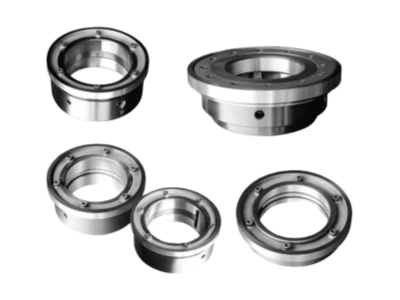
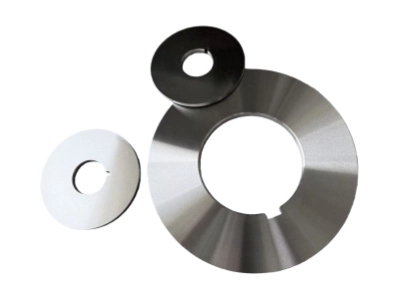
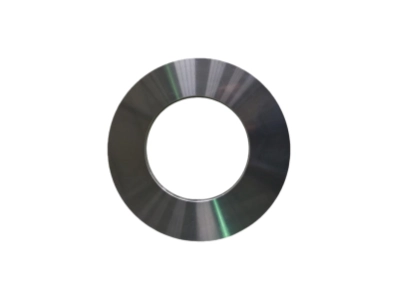
Longitudinal Shear Circular Blades We Manufacture

Circular slitter knife assemblies — blade and hub sets built for arbor mounting Longitudinal shear blades in a range of diameters and bore sizes Precision-ground circular slitting knife with a large bore Rotary shear blade with keyway bore for a keyed slitter shaft Slitter knife with keyway — both faces ground parallel Circular knife with pin-hole bore for bolt-mounted heads
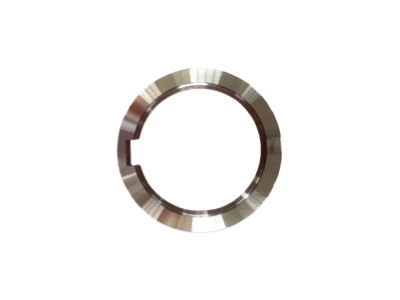
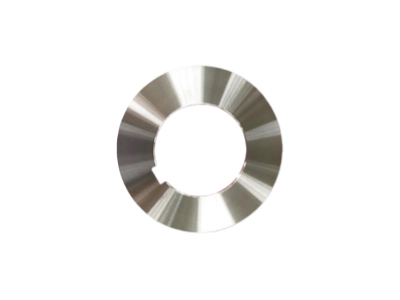
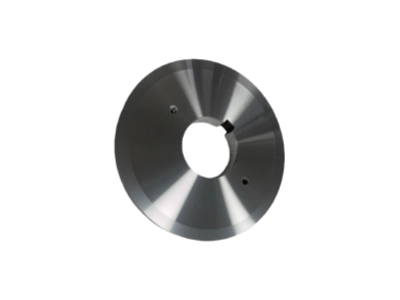
Choosing the Grade: Alloy Tool Steel, HSS or Tungsten Carbide
| Grade | Hardness | Best for | What it gives you |
|---|---|---|---|
| Cr12MoV / D2 (SKD11) | HRC 57–61 | 0.2–3.0 mm cold-rolled, galvanised and zinc-coated strip | The workhorse grade for general coil slitting — high chromium-carbide content, good abrasive wear resistance and a sensible cost per cut. |
| Cr12Mo1V1 | HRC 58–61 | Mixed thin-to-medium gauge runs, frequent size changes | The higher-vanadium version of Cr12MoV: finer, better distributed carbides for steadier edge retention when the material keeps changing. |
| 6CrW2Si | HRC 55–58 | 3.0–6.0 mm medium and heavy gauge steel | Shock-resisting tool steel. The slightly softer matrix absorbs the shear back-pressure of thick strip instead of chipping at the edge. |
| DC53 | HRC 60–63 | High-impact slitting and thin gauge run at speed | Higher toughness than D2 with less carbide segregation — the answer when D2 edges keep micro-chipping under impact. |
| M2 / SKH51 (HSS) | HRC 62–65 | Line speed above 200 m/min; thin stainless and silicon steel | High speed steel keeps its red hardness when the edge gets hot, so it holds a keen edge far longer on hard, thin, fast-moving strip. |
| H13 / SKD61 | HRC 47–52 | Hot-rolled band and elevated-temperature slitting | Hot-work steel with outstanding thermal crack resistance — chosen when the strip itself is warm or the process runs hot. |
| Tungsten carbide YG15 / YG20 | HRA 89–92.5 | Extremely abrasive strip where steel knives wear out too fast | Cemented carbide holds the edge many times longer than tool steel, at the cost of lower shock tolerance — best on a stable, well-aligned line. |
Not sure which grade fits your line? Tell us the material, the strip thickness, the coil width, the line speed and the knife clearance you run — our engineers will recommend the grade and edge geometry that gives the lowest cost per tonne slit.
Circular Slitting Knife Specifications
| Specification | Standard range | Notes |
|---|---|---|
| Material grade | Cr12MoV / D2 · Cr12Mo1V1 · 6CrW2Si · DC53 · M2 (SKH51) · H13 · Tungsten carbide YG15 / YG20 | Grade selected from the material you slit, the gauge and the line speed |
| Hardness | Alloy tool steel HRC 55–63 · HSS HRC 62–65 · Carbide HRA 89–92.5 | Vacuum hardening and multiple tempering; hardness reported per batch |
| Outer diameter (OD) | 80–450 mm standard, larger on request | OD sets the shear angle — we match it to your slitter geometry |
| Thickness | 1–30 mm | Chosen with the strip gauge, the arbor and the required side load |
| Bore / mounting | To your shaft drawing | Plain bore, keyway, spline, pin holes and bolt circles reproduced exactly |
| Thickness tolerance | ±0.003 mm | The single most important number for consistent knife clearance |
| OD tolerance | ±0.02 mm | Ground on CNC external grinders |
| Flatness & parallelism | ≤0.002 mm | Checked on a granite surface plate before dispatch |
| Concentricity (bore to OD) | ≤0.005 mm | Prevents axial runout and strip edge deformation |
| Edge angle | 90° shear edge as standard | Bevel, relief and micro-bevel angles set to your material and gauge |
| Surface finish | Ra 0.2–0.4 µm on both faces | Low friction keeps the strip tracking straight and reduces material build-up |
| Coatings | TiAlN · TiN · DLC on request | For high-speed lines and abrasive or sticky material |
| Edge condition | Burr-free and honed | Every blade edge-tested before packing |
| Packing | Edge-protected, sealed export case | Suitable for sea and air freight |
Values above are our standard production range. Send the machine model, the shaft drawing or a photo of the knife you are replacing with a ruler across it, and we will confirm the exact specification before quoting.
Typical Slitting Applications
Steel & Coated Coil Slitting
Rotary shear knives for uncoiler – slitter – rewinder lines, holding a consistent clearance so the strip width stays true from the first metre to the last.
- Cold-rolled, galvanised and zinc-coated strip, 0.2–3.0 mm
- Hot-rolled pickled band and medium gauge, 3.0–6.0 mm
- Pre-painted and colour-coated coil where edge marking must be avoided
Silicon Steel Slitting
Thin, hard, brittle strip demands a keen edge and the tightest possible thickness tolerance, because any burr shows up later in the laminated core.
- Grain-oriented and non-oriented silicon steel for transformer cores
- Motor and generator lamination strip
- HSS or DC53 grades for burr-free edges at high line speed
Non-Ferrous & Foil Slitting
Soft, ductile metals smear easily, so the blade has to shear rather than crush. Polished faces and a correctly set bevel keep the cut clean and the coil free of debris.
- Copper and brass strip for electrical and connector production
- Aluminium foil and light gauge sheet
- Battery and packaging foil slitting
Stainless & HSLA Strip
Work-hardening grades put the hardest duty on the edge. Higher-alloy and hot-work grades resist chipping and thermal cracking when the going gets tough.
- 304 / 316L stainless strip
- HSLA and high-tensile steel where edge chipping is the limit
- Rewinding, cut-to-length and building-material lines
Slitting a different material or running a special line? Send us the material, the strip thickness, the coil width, the line speed and the knife clearance you use — our engineers will specify the grade and edge geometry to match.
Why Source Slitting Knives from DEKEER
01 — Factory Direct
Manufacturer, not a trading companyDekeer Precision Cutting Tools (Nanjing) forges, vacuum heat treats and CNC grinds every slitter knife in-house — from round bar stock to the finished, honed cutting edge.
02 — Precision Grinding
Thickness ±0.003 mm, parallelism ≤0.002 mmFaces are ground on CNC surface grinders and the OD on CNC external grinders, then checked on a granite plate — the only way to hold a uniform knife clearance across a full arbor.
03 — Documented Quality
Hardness and dimensional report with every batchEach shipment carries an HRC or HRA hardness report, a dimensional inspection of OD, bore, thickness and parallelism, plus a 100% edge check and crack detection where the duty demands it.
04 — After-Sales
12-month warranty and regrind support12-month coverage against manufacturing defects, plus engineering advice on grade selection, clearance setting, safe regrind limits and grinding wheel choice for your line.
How a circular slitting knife order works, from inquiry to delivery
- 1Send your specMachine model, shaft drawing or a used knife
- 2Quote in 24 hGrade, OD, thickness and bore confirmed
- 3Drawing confirmationYou approve the final specification
- 4ProductionForging, heat treatment, CNC grinding
- 5Final inspectionHardness, dimensions, parallelism, edge test
- 6Export packingEdge-protected sealed cases, worldwide shipping
Frequently Asked Questions About Circular Slitting Knives
What is a longitudinal shear circular blade used for?
Which material should I choose — alloy tool steel, HSS or carbide?
What thickness tolerance do you hold, and why does it matter?
Can you machine the bore and keyway to match my shaft?
What edge angle do you grind?
How should I set the knife clearance?
Do you supply matched sets for a whole slitting arbor?
Can the knives be reground, and how many times?
What information do I need to send for a quote?
What is the usual lead time, and how do you ship?
Related Products and Guides
-
Tungsten Carbide Blades
Vacuum-sintered YG-series carbide blades for the most abrasive lines — many times the edge life of tool steel.
View series → -
Stainless Steel Blades
Corrosion-resistant blades for food, medical and damp-environment cutting where rust-free performance is essential.
View series → -
HSS Paper Cutter Blades
Guillotine and trimmer blades in HSS for Polar, Wohlenberg, Perfecta, Ideal, Itoh, Schneider and Maxima.
View series → -
Packaging Machine Blades
Cross-cutting and longitudinal blades for form-fill-seal, flow-wrap and pouch making equipment.
View series → -
Serrated Industrial Knives
Heat-seal and cutting serrated blades for packaging machinery, custom-made to drawing in four material grades.
View series → -
Doctor Blades
Precision metering blades for gravure and flexo printing, in carbon steel, LongLife ceramic and stainless series.
View series →
Talk to a slitting knife engineer
Send your machine model, the material and gauge you slit, or a photo of the knife you are replacing with a ruler across it. Our engineering team will confirm the right grade, dimensions, bore and edge angle within 24 hours — free of charge and with no obligation.
- Emaildkeblade@163.com
- WhatsApp+86 138 5558 8148
- Reply within24 hours, Mon–Sat