
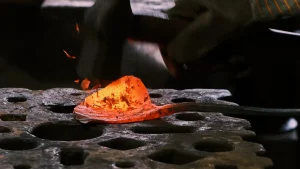
Industrial Blade Heat Treatment & Hardness Guide: HRC, Quenching & Tempering (2026)
Two blades can be made from exactly the same D2 steel, cost the same to grind, and look identical on the outside – yet one lasts 40,000 cuts and the other chips within a week. The difference is almost never the steel itself. It is the heat treatment: the tightly
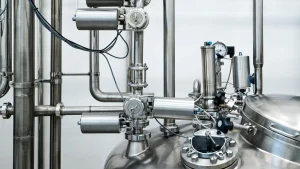
Food Processing Blades: Materials, Hygiene Standards & Selection Guide (2026)
In food processing, the blade is one of the few machine components that touches the product itself. A wrong material choice does not just shorten blade life — it can cause corrosion debris in the food, rejected audits, product recalls, and production stops during peak season. That is why choosing
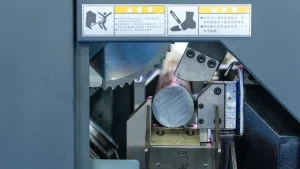
Industrial Blade Troubleshooting Guide: Fix Chipping, Burrs & Wavy Cuts (2026)
Blade chipping, edge burrs, wavy cuts or excessive wear? This 2026 industrial blade troubleshooting guide explains the most common cutting problems, their root causes and proven fixes for slitting, packaging, paper converting and recycling machines.
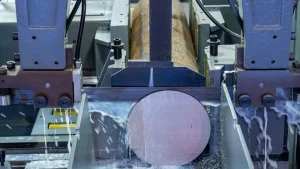
How to Extend Industrial Blade Service Life: Maintenance, Sharpening & Storage Guide for 2026
Practical guide on how to extend industrial blade service life in 2026: material selection, coating matching, sharpening schedules, cleaning, storage and wear monitoring for packaging, printing and recycling blades.
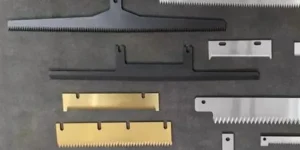
Industrial Blade Coatings: TiN, PTFE, Ceramic & DLC Complete Guide
In industrial cutting, food processing, flexo printing, and precision coating industries, blade sharpness is only the basic requirement. The surface coating technology directly determines blade service life, cutting stability, anti-stick performance, cleaning frequency, and production cost. Blades with the same base material can deliver completely different performance with different coatings.
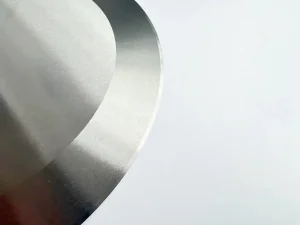
SKD11 vs D2 vs Tungsten Carbide: Which Material Is Better for Industrial Blades in 2026?
Choosing the correct industrial blade material is one of the most important decisions for manufacturers in packaging, printing, paper converting, recycling, and automated production industries. Modern production lines are becoming faster and more demanding. A cutting blade is no longer simply a replacement component. Its material, hardness, and wear resistance